Process
How to instruct a dental expert witness
What we need from you, how the expert is matched to the clinical issue, and what arrives at the end.
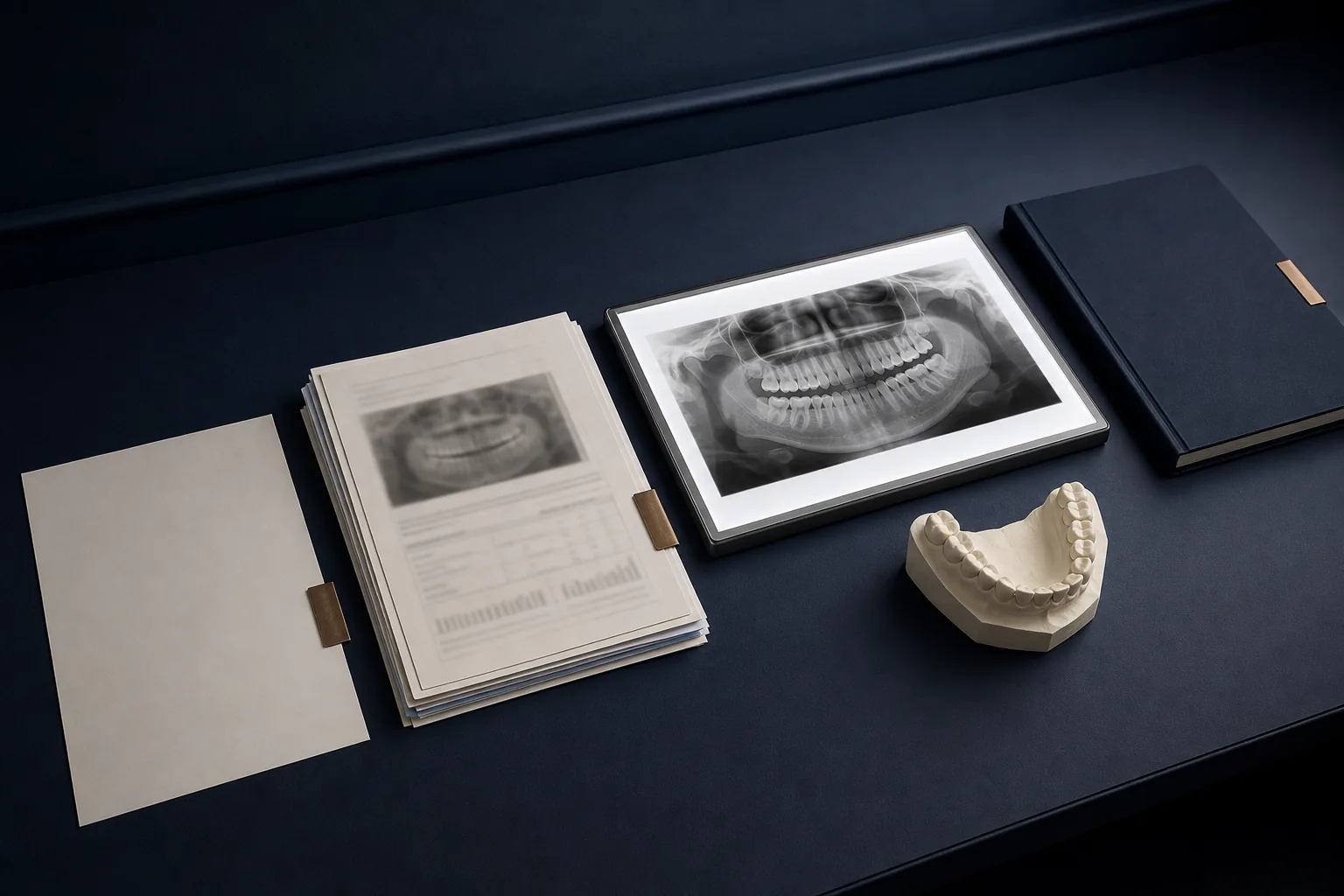
The instruction route
From first enquiry to delivered report.
A named case manager stays with the instruction throughout, keeping the clinical question, the expert and the papers aligned.
-
Your case
Tell us about the clinical issue.
An initial outline gives us enough to identify the discipline involved: the treatment complained of, the alleged harm and where the proceedings stand.
Useful at this stageProcedure, alleged breach, injury and procedural position.
-
Our assessment
We match the sub-specialist.
The clinical issue determines the expertise required, not merely the broad case label. You receive the expert’s CV and a fixed quote so you can assess suitability before committing.
You receiveThe proposed expert’s CV, the proposed scope and a fixed quotation.
-
The handover
You send the instruction and papers.
Your case manager confirms the scope with the expert and identifies any material gap in the records before the report is prepared.
Scope controlQuestions, records and any examination requirement are checked together.
-
The output
A CPR Part 35-compliant report.
The report is delivered by the agreed date. If the instruction later requires Part 35 questions, a joint discussion or further expert work, the same case manager coordinates it.
ContinuityThe instruction remains with one case manager beyond the first report.
Instruction pack
What to send with the instruction.
The expert can only work from the evidence provided. Incomplete records do not necessarily prevent a report, but the missing material and its effect on the opinion will be identified.
items marked as ready
Expert evidence
What the expert can and cannot do.
The value of the evidence comes from a clearly defined clinical remit and an opinion that remains independent of the party giving the instruction.
The duty to the court
To help the court on clinical matters within their expertise.
The duty overrides any obligation to the party instructing or paying the expert. The expert is not an advocate for a case theory.
Independence in practice
To analyse the evidence in the same way for a claimant, defendant or joint instruction.
Any connection that may bear on independence is raised before instruction. The analysis does not change with the instructing party.
Clinical scope
To give a clinical opinion within their discipline, including relevant condition, prognosis and future dental care evidence where instructed.
The expert does not decide the case, assess general damages or opine outside their own expertise.
Costs and scope
Know what the quotation covers.
The report defined by your letter of instruction.
You receive a fixed quote with the expert’s CV before the instruction is placed. It reflects the report scope and material identified at that point.
Further work is scoped separately
- 01 Part 35 questions
- 02 Joint discussions and statements
- 03 Conferences with counsel or the legal team
- 04 Attendance at trial
Frequently asked questions
Before you place the instruction.
Practical points about joint instructions, incomplete evidence and claimant examinations.
Yes, as a single joint expert instructed by the parties jointly. The expert’s overriding duty to the court remains the same.
The report identifies what is missing and what could not be determined as a result. The expert does not assume what an absent record would have shown.
For condition and prognosis, an examination is commonly required. For breach and causation, a records review may be sufficient. We confirm what the scoped questions require.
You receive the expert’s CV first. Where a preliminary conference is useful, your case manager can arrange it and clarify its scope.
Begin the instruction
Ready to instruct?
Tell us the case type and a case manager will send a suitable CV and a fixed quote.